
A buyer may spend only a few minutes walking through your home, yet that short visit shapes their sense of value before they review the details. The most costly home staging mistakes are rarely dramatic. More often, they are small distractions that make rooms feel darker, tighter, less cared for, or harder to picture as someone else’s future home.
Staging is not about making a house look like it belongs in a catalog. It is about helping buyers understand the space, imagine daily life there, and feel confident that the home has been well maintained. In Brantford, Brant County, and nearby communities, the right approach also depends on the property, buyer pool, price range, and current competition. A practical plan will always outperform a one-size-fits-all checklist.
1. Treating staging as decorating
Decorating reflects the people who live in a home. Staging supports the people who may buy it. Those goals overlap, but they are not identical.
A room can be beautifully decorated and still be difficult for buyers to read. A large sectional may suit your family but make the living room appear smaller. A formal dining room used as an office may be perfectly practical, but buyers can struggle to see its intended function. Staging gives every room a clear purpose and creates enough open space for buyers to notice the layout, storage, natural light, and finishes.
This does not mean stripping away all personality. A few well-chosen accessories, fresh bedding, and neutral artwork can make a home feel warm. The aim is less about neutrality for its own sake and more about removing visual competition.
2. Leaving too much furniture in the room
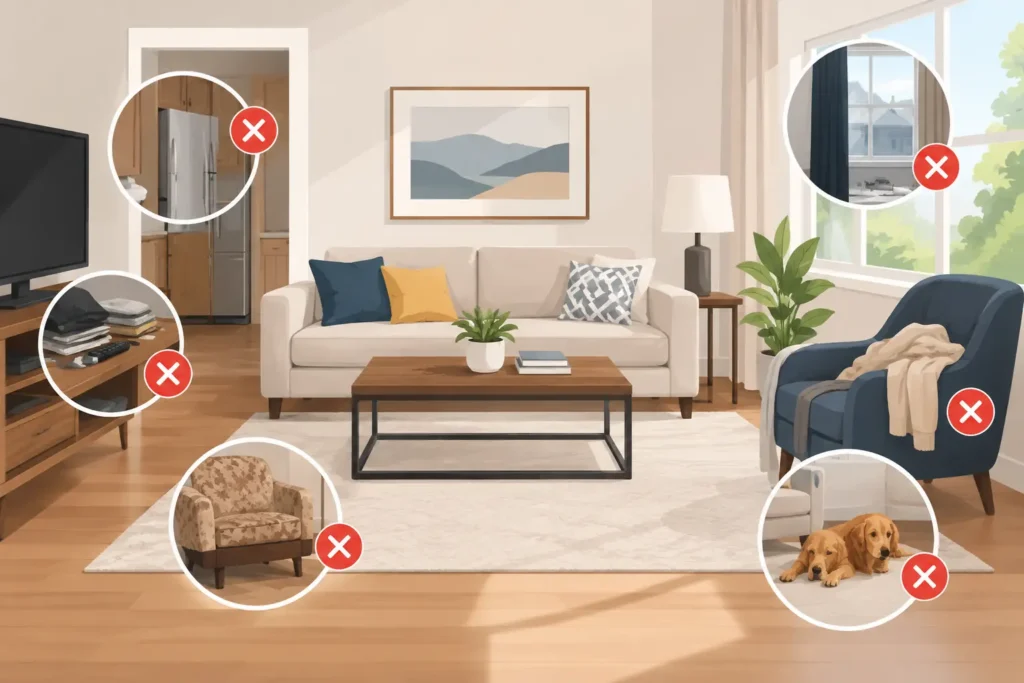
Overfurnished homes are among the most common home staging mistakes because owners are accustomed to navigating their spaces. Buyers are not. They need clear walkways and sightlines to understand room size.
Start by removing pieces that do not earn their place. Extra side tables, oversized chairs, duplicate storage units, and crowded bookcases can often go into storage before photos and showings. Furniture should define a room, not fill every wall. In a smaller bedroom, a bed, two compact nightstands, and a simple dresser may be enough.
Empty rooms, however, can present the opposite problem. Without furniture, some buyers underestimate a room’s dimensions or cannot tell how it would function. The best choice depends on the home. Vacant properties, unusual layouts, and large open areas may benefit from professional staging or carefully selected furniture rentals.
3. Cleaning only the surfaces buyers can see
Buyers notice the visible basics, but they also test the home in ways that are easy to overlook. They open closets, check cabinets, look in the pantry, and pay attention to smells. A spotless kitchen counter cannot fully offset a cluttered utility room or an overfilled closet.
Before listing, approach cleaning as evidence of care. Wash windows, clean baseboards, wipe light switches, address grout and caulking, and make appliances presentable. Clear kitchen counters except for a few intentional items. In bathrooms, remove most personal products and make towels look fresh and coordinated.
Closets deserve particular attention. They do not need to be empty, but reducing their contents by a third to half can make storage appear more generous. This also gives you a useful head start on packing.
4. Ignoring odors rather than solving them
Scent is one of the fastest ways to influence a showing, and not always in the way sellers expect. Heavy candles, plug-ins, and room sprays can make buyers wonder what they are meant to cover. The same applies to cooking odors, pet bedding, smoke, damp basements, and overflowing garbage.
Find the source first. Launder soft furnishings, clean drains, remove pet items before showings, air out the home when weather permits, and have carpets or upholstery professionally cleaned if needed. If there is a moisture concern, address it directly rather than masking it. A buyer who detects a persistent odor may assume there is a larger maintenance issue.
A clean, lightly fresh home is more persuasive than one that smells strongly scented.
5. Forgetting that light changes perceived value
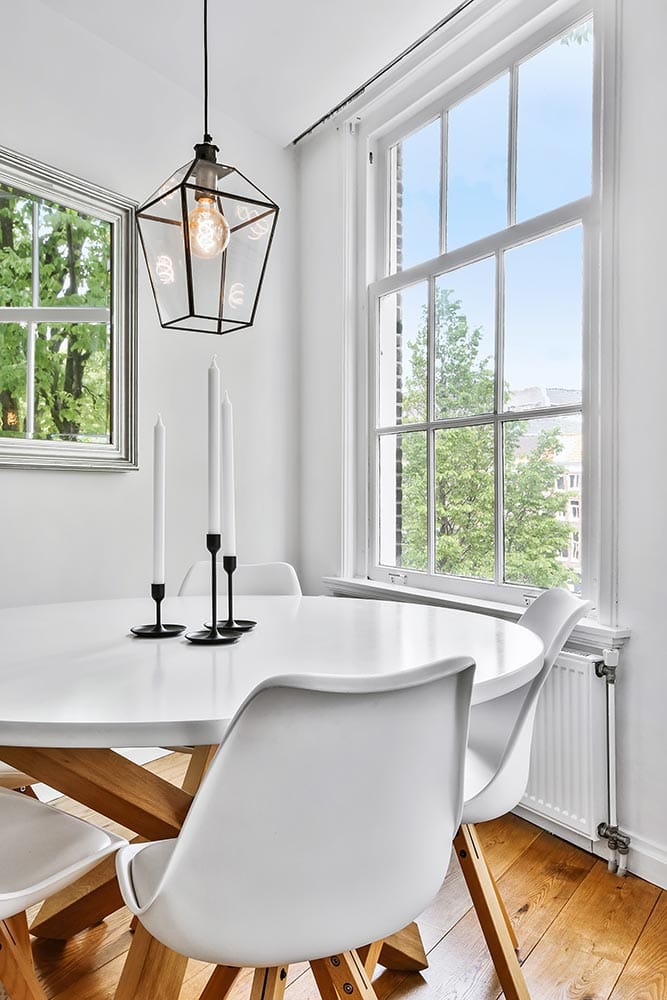
Dark rooms can feel smaller and less inviting, even when the square footage is strong. Many sellers leave window coverings as they normally use them, then lose the natural light that photographs and showings need.
Open blinds and curtains, clean the glass, and trim back outdoor growth that blocks key windows. Replace burned-out bulbs and use consistent bulb temperatures within a room. Warm white light generally creates a comfortable feel, while mismatched blue and yellow bulbs can make a space seem neglected.
There is a trade-off with privacy, especially for homes on busier streets. Sheer panels, top-down shades, or strategic window coverings can preserve privacy while allowing daylight in. Evening showings need special preparation: turn on lamps as well as overhead fixtures so corners do not disappear into shadow.
6. Making every room too personal
Family photos, collections, children’s artwork, sports memorabilia, and religious items all tell the story of a lived-in home. A small amount is natural. When these elements dominate, though, buyers focus on the current owner rather than the home itself.
Depersonalizing does not require making your house cold. Keep a few pieces that add character, but pack away highly personal displays and anything likely to divide opinions. The goal is to make it easier for a young family, a downsizer, or a first-time buyer to imagine their own routines in the space.
This is especially useful online. Listing photos need to communicate the home quickly to buyers who may be comparing many properties on the same evening.
7. Skipping repairs because buyers can handle them
Small unfinished tasks create an outsized impression. A loose door handle, peeling caulk, stained ceiling tile, dripping faucet, or missing outlet cover may be minor on its own. Together, they suggest a home that has been deferred rather than maintained.
Not every improvement will return its cost, and major renovations should never be started without considering the local market and likely buyer expectations. But completing visible maintenance is usually a sensible preparation step. Focus first on repairs buyers will encounter during a showing and issues that could raise questions in an inspection.
If a larger item is dated but functional, such as cabinetry or flooring, the right answer may be cleaning and presentation rather than replacement. Your pricing and marketing strategy should account for condition honestly.
8. Using rooms for storage during the listing period
The garage, basement, spare bedroom, and dining room often become temporary holding areas once packing begins. Unfortunately, those spaces are part of what buyers are evaluating.
A basement crowded with boxes can feel low, dark, or unfinished. A garage filled wall to wall can make storage seem limited. A spare bedroom used for overflow may look too small to serve as a bedroom at all. Rent a storage unit, use off-site storage with family if appropriate, or organize belongings into a clean, contained area that preserves the room’s function.
9. Neglecting curb appeal and the entry
The showing starts before the front door opens. Buyers notice the condition of the walkway, porch, landscaping, exterior lighting, house numbers, and front door while they wait to enter. A neglected entry can make them more critical once inside.
You do not need an elaborate landscaping project. Mow the lawn, edge where needed, clear seasonal debris, touch up the front door, remove worn welcome mats, and make sure the entry light works. In winter, safe snow and ice removal matters just as much as presentation.
Inside, keep the foyer open. Shoes, coats, packages, and bulky furniture can make the first few feet of the home feel cramped.
10. Staging once, then letting it unravel
A home can look excellent for photography and gradually lose that polished feel after a week of daily life. Beds go unmade, counters collect mail, laundry appears, and pet supplies return to view. The listing period requires a realistic routine, not a single burst of effort.
Create a short showing-ready plan for the household: make beds, clear counters, empty garbage, open blinds, turn on key lights, secure valuables, and leave with pets whenever possible. Keep a basket or bin for last-minute items so you can reset quickly before a showing.
If maintaining that routine feels demanding, simplify the staging further. Fewer accessories, less furniture, and less clutter mean less to manage. The best staged home is one that can remain welcoming throughout the marketing period, not just for the photographer.
A thoughtful staging plan should make your home easier to show and easier for buyers to remember. Before making expensive changes, ask which details are truly limiting the home’s first impression and which are simply part of normal lived-in character. Clear local advice can help you put your effort where it will matter most.